Understanding Cancer Pain: It Is Not "Part of the Deal"
Pain is one of the most feared symptoms of cancer, yet it is also one of the most treatable.
A common misconception is that if you have cancer, you simply have to endure pain. This is
false. Uncontrolled pain suppresses the immune system, delays healing, disrupts sleep, and
leads to depression. Treating pain is not just about comfort; it is a critical component of
treating the cancer itself.
Cancer pain can arise from the tumor pressing on nerves, bones, or organs. It can also be a
side effect of treatments: surgery healing, chemotherapy-induced neuropathy
(tingling/burning), or radiation skin burns. The first step to relief is an honest
conversation with your doctor—you do not get "extra points" for suffering in silence.
"Pain is inevitable, but suffering is optional. Effective pain management is your
fundamental right as a patient."
The WHO Pain Management Ladder
Oncologists follow a structured global guideline known as the WHO Analgesic Ladder to manage
pain effectively while minimizing side effects:
- Step 1 (Mild Pain): Non-opioids like Paracetamol (nSAIDs) or Ibuprofen.
These are often underestimated but effective for baseline pain control.
- Step 2 (Moderate Pain): "Weak" opioids (like Tramadol or Tapentadol)
added to Step 1 medications.
- Step 3 (Severe Pain): Strong opioids (like Morphine or Fentanyl
patches). These are the gold standard for severe cancer pain.
Note: Using morphine for cancer pain does not mean the end is near.
It simply means your pain receptors need a stronger blockade to allow you to live normally.
Addressing the Opioid Myth
Many patients and families fear morphine due to myths about addiction. Here are the medical
facts:
- Addiction vs. Dependence: Addiction is a psychological craving.
Dependence is a physical need. Cancer patients taking opioids for legitimate pain rarely
develop psychological addiction.
- Respiratory Depression: When doses are titrated gradually by a
specialist, breathing issues are extremely rare.
- Drowsiness: Most sedation wears off after the first few days as the
body adjusts.
Interventional Pain Management
For pain that doesn't respond to oral medicines, or to reduce medication side effects,
"Interventions" can be a game changer. These are minimally invasive procedures done by pain
specialists:
- Nerve Blocks: Injecting an anesthetic directly around a specific nerve
group (e.g., Celiac Plexus block for pancreatic cancer pain) to "turn off" the pain
signal.
- Intrathecal Pumps: Delivering pain medicine directly into the spinal
fluid, requiring 1/100th of the oral dose.
- Radiofrequency Ablation: Using heat to disable specific
pain-transmitting nerves.
Integrative and Holistic Approaches
Pain is not just physical; it has emotional and psychological dimensions (Total Pain). A
comprehensive approach includes:
- Physical Therapy: Massage, lymphatic drainage, and gentle exercises to
prevent stiffness and muscle spasms.
- Psychological Support: Anxiety lowers the pain threshold. CBT and
relaxation techniques can actually reduce the amount of painkiller needed.
- Complementary Therapies: Acupuncture and meditation have proven
benefits in reducing chemotherapy-induced neuropathy and joint pain.
Palliative Care vs. Hospice: Knowing the Difference
Many patients are scared when we mention "Palliative Care." Let's clear the confusion:
- Palliative Care: Specialized medical care for people living with a
serious illness. It focuses on providing relief from the symptoms and stress of the
illness. It can be given ALONGSIDE curative treatment (chemo/radiation) at any
stage.
- Hospice Care: Care for people who are nearing the end of life (usually
< 6 months prognosis), where curative treatment has stopped.
At Dr. Aswin’s clinic, we believe in a "Palliative Care from Day 1" approach to maximize your
Quality of Life.
The Caregiver's Role in Pain Management
As a caregiver, you are the patient's voice.
- Watch for Non-Verbal Cues: Frowning, grimacing, or shallow breathing
often indicate pain even if the patient says "I'm fine."
- Track Meds: Keep a strict schedule. Don't wait for pain to become
severe before giving the next dose.
Breaking the Morphine Stigma
Many families fear morphine, thinking it means "the end." This is a myth.
- Addiction is Rare: When used for cancer pain, addiction is extremely
rare.
- It Doesn't Hasten Death: Proper pain management actually helps patients
live longer by reducing stress on the body.
- Start Low: We start with small doses and adjust carefully.
How to Describe Your Pain (The SOCRATES Method)
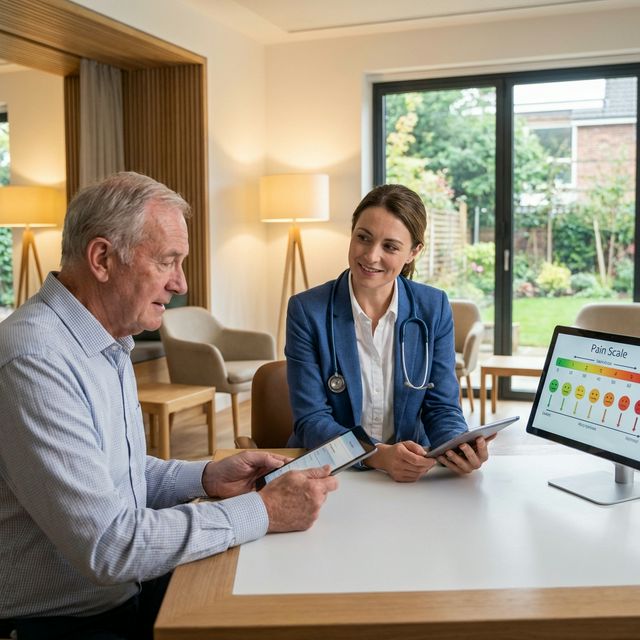
Doctors can only treat what they understand. Use this method to describe your pain clearly:
- S (Site): Where exactly is it?
- O (Onset): When did it start? Sudden or gradual?
- C (Character): Is it sharp, dull, burning, stabbing, or achy?
- R (Radiation): Does it shoot anywhere (e.g., lower back to leg)?
- A (Associations): Any nausea, sweating, or weakness with it?
- T (Time): Is it constant or does it come and go? Worse at night?
- E (Exacerbating/Relieving): What makes it worse (moving, eating)? What
helps (heat, rest)?
- S (Severity): Rate it 0 to 10.
Non-Pharmacological Pain Relief
Medicines are the foundation, but these add-ons can reduce the dosage needed:
- Heat/Cold Therapy: Warm compresses for muscle spasms; cold packs for
inflammation or bone pain.
- Distraction Techniques: Music, reading, or guided imagery can "close
the gate" on some pain signals in the spinal cord.
- Positioning: Sometimes a simple pillow under the knees or elevating the
head can relieve pressure on tumors impacting nerves.
FAQ: The Truth About Opioids
Will I get addicted to Morphine?
Fact: Less than 1% of cancer patients taking opioids for valid
pain develop addiction. Addiction is a psychological craving; what you have is a
physical need for relief. Do not deny yourself relief out of fear.
Will it make me sleep all day?
Drowsiness is common only for the first 3-4 days as your body adjusts. Once
stable, most patients are fully alert and functional. In fact, being pain-free
gives you more energy.
If I use it now, will it stop working later when I really
need it?
No. There is no "ceiling dose" for morphine. If your pain increases, we can
safely increase the dose. Using it early prevents the pain pathway from becoming
"sensitized" (where pain becomes harder to treat).