- hope@aswinonco.in
- Chennai, Tamil Nadu (Online consults for NRI / pan-India)
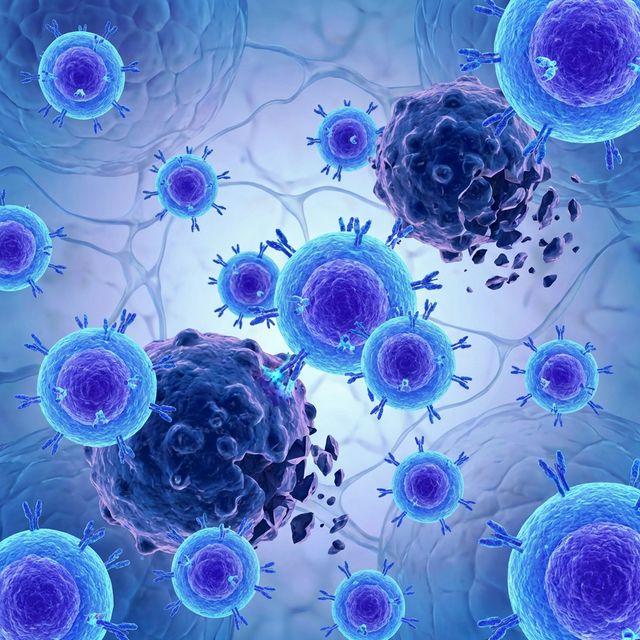
Immunotherapy has emerged as the "fourth pillar" of cancer care, standing alongside surgery, chemotherapy, and radiation. But unlike these traditional treatments that directly attack the tumor, immunotherapy takes a different approach: it trains the patient's own immune system to recognize and destroy cancer cells. This paradigm shift has turned previously fatal diagnoses into manageable chronic conditions for many patients, particularly those with melanoma, lung cancer, and kidney cancer.
The immune system is our body's defense force, designed to detect and eliminate foreign invaders like bacteria and viruses. Cancer cells, however, are masters of disguise. They can produce proteins that act as specific "masks" or "brakes" (checkpoints) to stop immune cells from attacking them. Immunotherapy effectively rips off these masks or releases these brakes.
"We are no longer just treating the cancer; we are treating the patient's immune system to treat the cancer. This living drug—your own cells—can adapt and evolve to keep the cancer in check."
| Feature | Chemotherapy | Immunotherapy |
|---|---|---|
| Mechanism | Directly kills rapidly dividing cells | Stimulates immune system to kill cancer |
| Precision | Affects both cancer and healthy cells (hair, gut) | More targeted, sparing healthy dividing cells |
| Response Time | Often rapid tumor shrinkage | May take longer (weeks/months) to show effect |
| Duration of Benefit | Effects stop when drug stops | "Memory" effect can provide protection for years |
Immunotherapy is not a single drug but a category of treatments. The main types available in India include:
These are the most widely used immunotherapies. T-cells (soldiers of the immune system) have "checkpoints" that prevent them from attacking normal cells. Cancer cells hijack these checkpoints to turn T-cells off. Inhibitors block these checkpoints (like PD-1, PD-L1, or CTLA-4), releasing the brakes on the immune system.
This is a revolutionary "living drug." T-cells are harvested from the patient's blood, genetically engineering in a lab to produce specific receptors (chimeric antigen receptors) that bind to cancer cells, and then infused back into the patient. It acts like a heat-seeking missile.
Monoclonal Antibodies (like Rituximab) mark cancer cells so the immune system can find them. Cancer Vaccines (unlike flu shots) treat existing cancer by introducing tumor antigens to jumpstart a reaction.
Not every cancer responds to immunotherapy. It works best for "hot" tumors (those with many mutations that the immune system can see). To know if you are eligible, we create a "Tumor Profile":
Immunotherapy generally has fewer side effects than chemotherapy (less hair loss, less nausea). However, it can cause the immune system to attack healthy organs (Autoimmune-like reactions). Watch out for:
Important: If you experience these, call your doctor immediately. Steroids can manage these side effects effectively.
Research is showing that combining immunotherapy with chemotherapy or radiation can be more effective than either alone. This "one-two punch" wakes up the immune system (chemo kills cells, releasing antigens) and then amplifies the attack (immunotherapy).
Research shows that combining treatments often works better than one alone. Common combinations include:
Because immunotherapy revs up the immune system, it can sometimes cause the body to attack healthy organs, leading to inflammation. These side effects are markedly different from chemotherapy (less hair loss, less nausea) but can be serious if ignored.
Precaution: Patients on immunotherapy should carry a wallet card stating their treatment. If they go to an ER, doctors need to know, as steroids—not antibiotics—are often the treatment for side effects.
A major barrier historically was cost. However, the landscape is changing:
While not a magic bullet for everyone, immunotherapy offers the hope of long-term survival even in stage 4 disease. Biomarker testing (like PD-L1 scoring) helps us predict who will benefit most.
Fact: While it uses the body's natural system, it is a powerful medical treatment. It can cause unique and sometimes severe autoimmune side effects that require medical management.
Fact: It is currently approved for specific cancers (like Lung, Melanoma, Kidney). For many other cancers, chemotherapy or surgery remains the gold standard.
Unlike chemotherapy, there are fewer strict dietary restrictions, but supporting your immune system is key:
Unlike chemo which shrinks tumors fast, immunotherapy can take time. Sometimes tumors appear to grow before shrinking (pseudo-progression) because immune cells rush into the tumor. We use specific scans (iRECIST) to evaluate this.
Yes, most comprehensive health insurance policies now cover "Biologicals" and "Immunotherapy," though there may be sub-limits. Always check your policy wording for 'Modern Treatment Methods'.
This is a complex decision. Standard protocols often suggest 2 years of maintenance therapy even after a complete response, but this varies by cancer type. Never stop without doctor approval.