- hope@aswinonco.in
- Chennai, Tamil Nadu (Online consults for NRI / pan-India)
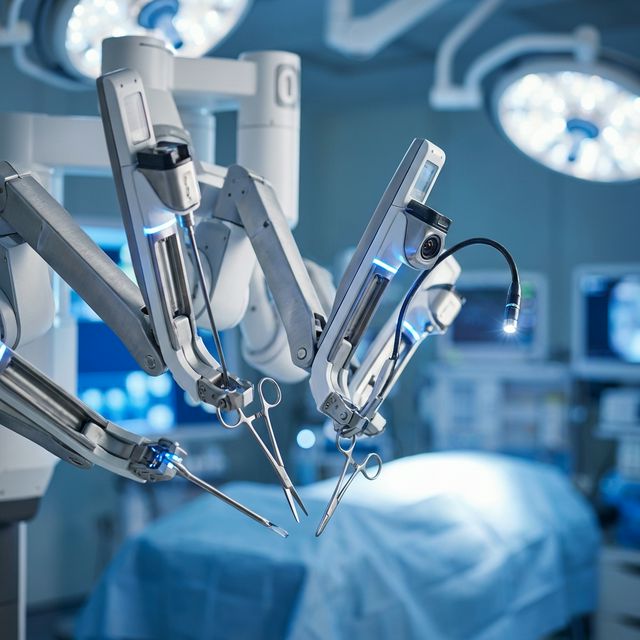
Robotic surgery sounds like science fiction, but it is one of the most significant advancements in modern oncology. It is important to know that the robot does not operate on its own. It is a tool completely controlled by a highly skilled surgeon.
The surgeon sits at a console nearby and controls the robot's arms. The system (often the da Vinci Surgical System) translates the surgeon's hand movements into smaller, more precise movements of tiny instruments inside your body.
Instead of large incisions, we make tiny cuts (1-2 cm). This means less trauma to the body.
The 3D camera provides a high-definition, magnified view of the surgical site, allowing the surgeon to see nerves and blood vessels clearly.
The robot's "wrists" can rotate 360 degrees, far more than a human hand. This allows us to operate in tight spaces (like the pelvis) with ease.
Not every cancer requires robotic surgery. It is most commonly used for prostate, kidney, gynecologic (uterus/ovary), and colorectal cancers. Your surgeon will decide the best approach based on your specific case.
One of the biggest advantages is the speed of recovery. Here is a typical timeline for a robotic surgery patient:
| Timeline | Milestone |
|---|---|
| Day 1 (Surgery Day) | Walking within hours. Clear liquids diet. |
| Day 2-3 | Discharge to home (vs. 5-7 days for open surgery). Minimal pain meds needed. |
| Week 2 | Driving and light daily activities. |
| Week 4 | Return to work (desk jobs). |
We often recommend a pre-surgery fitness plan to improve outcomes:
Because robotic surgery spares tiny nerves and vessels, long-term side effects (like urinary incontinence in prostate surgery) are significantly reduced compared to open surgery. Most patients return to their baseline quality of life within 3-6 months.
Before deciding, ask:
Yes, most major private insurance providers in India now cover robotic surgeries, though some may have a co-pay or specific sub-limits. Always check your policy for "Robotic Surgeries" coverage.
Studies show cancer control (oncological outcome) is equivalent to open surgery. The main advantage is quality of life—less pain, less blood loss, and faster return to normal life.
The surgery itself is more expensive due to the technology and disposables used. However, because hospital stay is shorter and complications are fewer, the total cost to the patient is often comparable to open surgery in the long run.